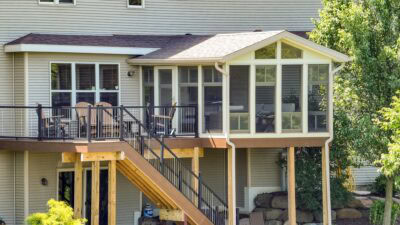
When you decide to add a sunroom to your home, you aren’t just adding square footage; you are adding a dedicated space to experience the outdoors from the comfort of your indoors. While much of the focus goes into choosing the right windows, flooring, and furniture, the most critical architectural decision you will make is the roof. In this guide, we will break down the three most popular sunroom roof design considerations: Studio, Gable, and Cathedral, helping you decide which design is the perfect fit for your vision.
The Budget-Friendly Choice: The Studio Roof Style
If your primary sunroom roof design considerations revolve around simplicity, modern aesthetics, or budget, the Studio roof is likely your best bet. A studio roof is characterized by a single, sloping plane that typically attaches to the side of the house beneath the existing roofline.
Characteristics & Benefits
The studio roof is the most straightforward style to design and install, making it generally the most affordable option. Its clean lines complement modern and contemporary home designs well. It is also highly versatile structurally, capable of attaching easily to nearly any home structure, including tricky locations under existing eaves or fascias.
Because it has a shallower pitch, it provides a cozy, intimate interior feel. For those planning a seasonal (three-season) sunroom, a solid insulated studio roof is excellent for blocking harsh overhead sun, reducing heat gain during peak summer months.
Standard Architectural Harmony: The Gable Roof
A Gable roof—also known as a pitched roof—features two sloping panels that meet at a central ridge. This forms a triangle shape above the room’s walls. This is one of the most common residential roof structures in North America, which makes it a very natural choice for home additions.
Aesthetic Integration & Functionality
From a sunroom roof design consideration standpoint, the gable style excels at architectural harmony. A well-designed gable sunroom will look like it was built with the original house rather than tacked on as an afterthought, especially if you match the pitch and shingle style of your main roof.
Functionally, the pitched design allows for excellent runoff of rain and snow. The interior follows the roofline, offering a vaulted ceiling that dramatically increases the sense of space, airiness, and natural light compared to a flat or low-slope studio design. It is also an ideal structure for integrating vertical windows on the gable end or skylights on the slopes.
The Dramatic, Open Statement: The Cathedral Roof
While “Gable” refers to the exterior triangular shape, “Cathedral” refers strictly to the interior ceiling structure. A cathedral ceiling follows the slope of the roof from the walls all the way up to the highest point of the ridge, creating a dramatic, vaulted space without horizontal cross beams. Often, when contractors discuss “Gable” vs “Cathedral” sunrooms, they are using the terms interchangeably to describe the spacious, pitched interior.
Maximizing Volume and Light
A cathedral roof style is about maximization. It maximizes interior volume, giving even a small footprint a grand, majestic feel. It also maximizes light capture. With such high vertical walls on the gable end, you can install floor-to-ceiling glass, ensuring your sunroom design is bathed in light from sunrise to sunset.
However, the drama comes at a price. This is the most complex roof structure to build, requiring precise engineering to support the heavy glass loads without obstructive support beams. This translates to a significantly higher investment in both materials and skilled labor. It also presents the biggest climate control challenge, as that massive interior volume requires more robust heating and cooling solutions.
Vital Sunroom Roof Design Considerations Before You Build
Choosing between these styles requires weighing several factors beyond just initial appearance. Your decision should align with your climate, your home’s existing structure, and how you intend to use the space.
Architectural Match and Flow
For a seamless transition, the sunroom’s roofline should flow naturally from your existing home’s design. A well-matched roofline avoids an awkward, out-of-place appearance. While a perfect structural match isn’t always necessary, complement is essential. For example, a sharp, triangular gable sunroom might look out of place attached to a mid-century modern home with entirely flat rooflines.
Structural Integrity and Your Environment in Roof Design
Your local climate plays a major role. Homeowners in snow-heavy regions must prioritize structure. Solid insulated panels or heavy glass with reinforced gabled structures are necessary to handle snow loads. Steeper pitches (Gable and Cathedral) improve water and snow runoff, reducing the risk of pooling and leaks. If you reside in an area with intense sunlight, solid insulated roofs (like those common on Studio designs) block heat gain and UV rays, keeping the room more comfortable than all-glass solarium styles.
Cost vs. Usability in Sunroom Roof Design Considerations
The final point of our sunroom roof design considerations guide is the correlation between complexity and cost. A simple studio roof might save thousands, allowing you to upgrade your windows or flooring. However, a gable or cathedral roof delivers an entirely different feeling of being connected to the sky. If your goal is a grand, all-season family retreat, the investment in a cathedral roof might deliver the long-term enjoyment you desire.
If you have any questions, please call 608-222-7777 or submit your information here and we will reach out.