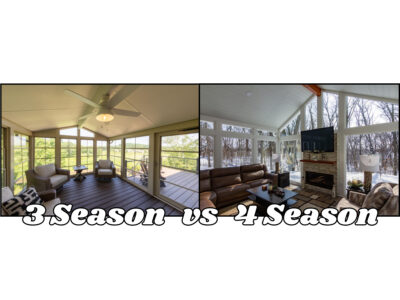
 Deciding between 3 season vs 4 season sunroom? A sunroom is one of the most popular home additions because it bridges the gap between indoor comfort and outdoor beauty. However, before you break ground, you face a critical decision: should you build a 3 season or a 4 season sunroom?
While they may look similar at a glance, the engineering, cost, and functionality differ drastically. This guide breaks down the pros, cons, and construction details of “3 season vs 4 season sunroom” additions to help you make the right investment for your lifestyle.
The 3 Season Sunroom: The Affordable “Fair” Weather Friend
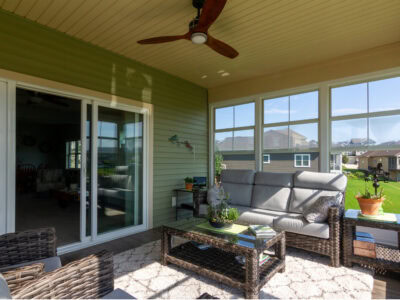 As the name suggests, a three-season room is designed to be used during spring, summer, and fall. It is essentially an enclosed patio or deck that offers protection from rain, wind, and bugs, but lacks the thermal engineering to handle extreme temperatures.
Construction and Engineering
Three-season rooms are generally built with:
- Vinyl or Single-pane glass: Offers visibility but moderate insulation.
- Aluminum framing: Lightweight and cost-effective, but conducts heat and cold.
- Minimal insulation: Walls and roofs may have little to no insulation.
- No HVAC connection: These rooms are rarely connected to the home’s central heating and cooling system.
Best Uses
This space is perfect for casual dining, a summer reading nook, or a bug-free evening lounge. If you live in a mild climate, you might get nearly year-round use out of it, but in areas with freezing winters, the room will be too cold to use from December through February.
Pros
- Lower Cost: Significantly cheaper to build due to lighter materials and lack of HVAC work.
- Faster Installation: Often completed in a fraction of the time required for a 4-season room.
- Maximum Airflow: Usually features floor-to-ceiling screens or sliding windows.
Cons
- Limited Usability: Unusable during extreme cold or heat waves.
- Condensation: Single-pane glass can fog up or frost over in winter.
The 4 Season Sunroom: The True Extension of Your Home
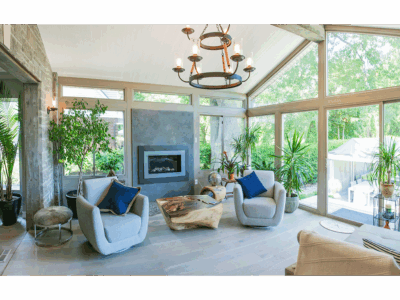 A four-season sunroom (often called an “all-season room”) is a true extension of your home’s living space. It is engineered to be climate-controlled and comfortable 365 days a year, regardless of snow, ice, or blistering heat.
Construction and Engineering
To qualify as a four-season room, the structure requires:
- Double or Triple-pane glass: Often treated with Low-E coatings and filled with Argon gas to stop heat transfer.
- Thermally broken framing: Vinyl or thermally broken aluminum designed to stop the transfer of cold air.
- Full Insulation: The roof, walls, and floor are insulated to meet local building codes for living spaces.
- HVAC Integration: Connected to your central heating/cooling or equipped with a dedicated mini-split system.
Best Uses
Because it is climate-controlled, a 4-season sunroom can serve as a home office, a playroom, a breakfast nook, or a primary family room. It feels just like the rest of your house—just with a better view.
Pros
- Year-Round Use: Enjoy the snow falling while sitting in a warm, cozy room.
- Increased Home Value: Because it counts as conditioned square footage, it adds significant resale value.
- Versatility: Can house electronics, plants, and fine furniture without fear of temperature damage.
Cons
- Higher Cost: Requires a larger budget for materials, foundation work, and HVAC.
- Longer Build Time: Requires more permits and construction time.
How to Choose the Right One
When deciding on the “3 season vs 4 season sunroom” debate, ask yourself these three questions:
- What is the primary function? If you want a dedicated home office or a TV room, you need a 4-season room to protect your electronics and comfort. If you just want a place to drink coffee without swatting mosquitoes in July, a 3-season room is sufficient.
- What is your climate? If you live in the deep South, a 3-season room might get too hot in summer. If you live in the North, it will be an icebox in winter. A 4-season room mitigates these extremes.
- What is your budget? If budget is the primary driver, a 3-season room offers the “sunroom experience” at a lower price point. However, if you are looking for ROI (Return on Investment), a 4-season room adds legitimate livable square footage to your property appraisal.
Conclusion
Both sunroom types offer a beautiful way to bring the outdoors in. The choice ultimately comes down to whether you want a seasonal escape or a permanent expansion of your living space.
Ready to start planning your addition? Contact us today for a free consultation to discuss which sunroom fits your home and budget best.