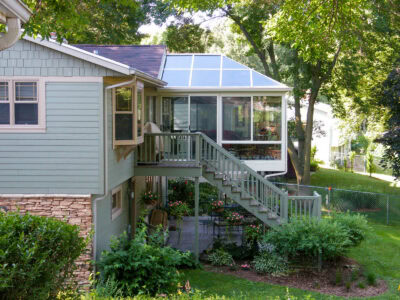
 Adding a sunroom to your home is an exciting project, but it also comes with plenty of big decisions. Homeowners often find themselves sorting through a mountain of information regarding styles, local building codes, and budgets. To help make your planning process as smooth as possible, we have gathered the top 5 questions about sunrooms answered all in one convenient place. With over 50 years of experience building across Southern Wisconsin, we know exactly what local homeowners need to consider before breaking ground. Now let’s go over the top 5 questions about sunrooms.
1. What is the Difference Between a 3-Season and 4-Season Sunroom?
This is easily the most common question we encounter. The choice between these two styles ultimately dictates how you will use the space—and your overall project budget.
3-Season Sunrooms: Designed to be used from early spring through late autumn. They are typically constructed with high-quality single-pane glass or flexible vinyl panels. While they lack heavy-duty thermal insulation, they are an incredibly cost-effective way to get bug-free, rain-protected outdoor enjoyment.
4-Season Sunrooms: Engineered to be lived in 365 days a year, regardless of a harsh Wisconsin winter. These rooms feature thermally broken frames, double-pane insulated glass, and are fully integrated into your home’s heating and cooling system.
2. Do I Need a Building Permit for a Sunroom?
Yes. Because a sunroom alters your home’s footprint, local municipalities across Southern Wisconsin require a building permit.
Navigating Local Building Codes
Whether you live in Madison, Sun Prairie, or elsewhere in Southern Wisconsin your project must comply with regional zoning laws, setback requirements, and structural snow-load engineering. A professional installer should handle this entire process for you—from drafting blueprints to securing final municipal approvals—ensuring your room is completely legal and safe.
3. Can You Use a Sunroom in the Winter?
If you opt for a 4-season sunroom, absolutely! We build these rooms to withstand heavy snow loads and sub-zero temperatures, keeping you perfectly warm inside.
Heating Options for Year-Round Comfort
To keep a year-round room cozy, we utilize advanced energy-efficient glass that reflects radiant heat back into the room. You can pair this with zone-heating solutions, such as a ductless mini-split system or radiant floor heating, allowing you to watch a January snowstorm in total comfort.
Homeowners generally close down a standard 3-season room for the winter months, though the space still serves as an excellent buffer zone that blocks freezing winds from hitting your main house walls.
4. Does a Sunroom Add Value to Your Home?
Yes, a well-built sunroom offers a strong return on investment (ROI), both financially and in terms of your daily quality of life.
Boosting Curb Appeal and Square Footage
From a real estate perspective, a sunroom adds highly desirable square footage and distinct architectural charm that makes your property stand out in a competitive market. Buyers love the idea of a sun-drenched bonus space, making it a fantastic selling point if you ever choose to move.
5. How Much Does an Average Sunroom Cost?
Because every backyard footprint is unique, sunroom costs vary widely based on size, materials, and foundation requirements.
Finding a Budget That Works for You
A simple porch enclosure or 3-season conversion utilizing an existing deck will be significantly more budget-friendly than a ground-up, engineered 4-season glass addition. The best way to get an accurate number is to have our design expert evaluate your home’s existing foundation, roofline, and grading to provide a transparent, fixed-price quote.
Ready to Start Planning Your Dream Space?
If you’re ready to see what is possible for your specific home, our team will help find the answer. Contact us today to schedule your free, no-obligation design consultation! You can also follow us on Facebook and know when our blog drops every time.