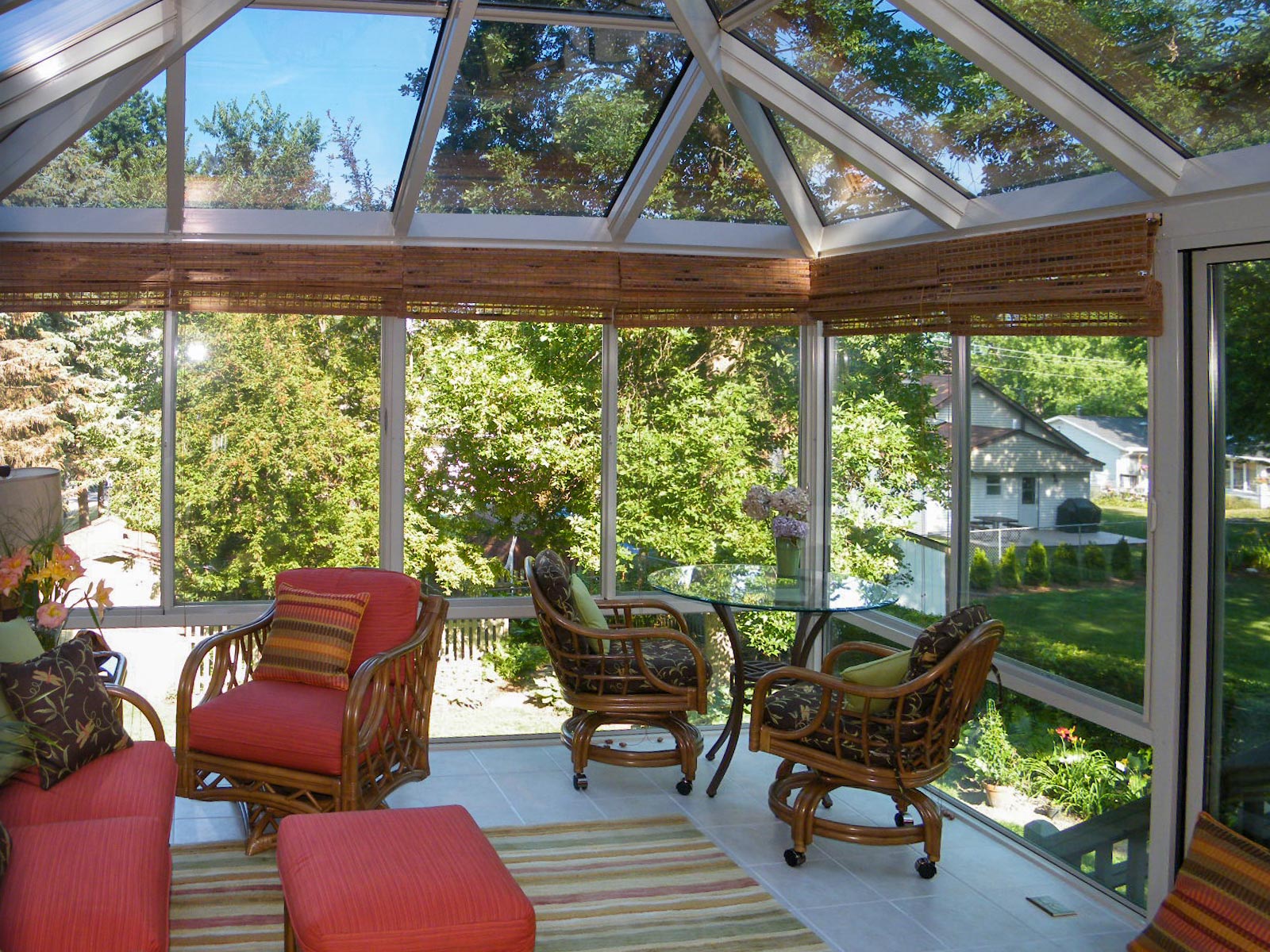
 Because sunrooms feature expansive walls of glass and frequent exposure to changing temperatures, decorating them requires more thought than a standard living room. Intense UV rays, humidity shifts, and direct sunlight can quickly fade standard upholstery or warp delicate wood furniture. Selecting the right textures and resilient materials ensures your sunroom stays comfortable, stylish, and durable year-round. Here is how to choose the best materials and furnishings for your sunroom decorating project.
1. Choose Weather-Resistant Materials and Furnishings
Standard indoor fabrics and untreated woods often struggle under constant sunlight. Instead, invest in durable materials designed to withstand intense UV exposure and occasional moisture without fading, cracking, or warping.
Performance Fabrics: Look for solution-dyed acrylics or treated polyester blends for sofa cushions and accent chairs. They resist sun fading, repel spills, and clean easily.
Wicker and Rattan: Classic woven materials bring timeless coastal or botanical charm to a sunroom while remaining lightweight and breathable. (Tip: Opt for synthetic resin wicker if your room experiences high humidity or seasonal temperature swings.)
Bamboo and Teak: Both bamboo and natural teak contain natural oils and dense grain structures that prevent warping and moisture damage, making them ideal for coffee tables, chair frames, and shelving.
2. Ground the Space with Layered Rugs
Tile, concrete, and hardwood are the most common flooring choices for sunrooms, which can sometimes leave the room feeling echoey or cold. Adding rugs softens the acoustics and defines distinct seating zones.
Indoor/Outdoor Area Rugs: Ground your main seating arrangement with a durable, easy-to-clean indoor/outdoor rug—such as a woven polypropylene style like the Alegre Bordered Indoor/Outdoor Rug. They handle foot traffic from the backyard effortlessly and resist sun bleaching.
Layering for Warmth: To create extra visual depth and coziness, layer a smaller, patterned flatweave rug or a soft faux-sheepskin throw over a large neutral jute or sisal base rug.
3. Bring in Warmth with Natural Accents
To balance out the hard surfaces of glass windows and metal or wood framing, incorporate organic decorative elements that connect the interior aesthetic to your backyard view.
Wood-Leg Planters: Elevate your favorite houseplants off the floor using mid-century wood-leg planters to add height and warmth.
Rattan Side Tables: Pair small woven rattan or cane side tables with your armchairs for an airy, textural surface that doesn’t block natural light.
Linen Throw Pillows: Linen pillow covers add relaxed, breathable texture to sofas and daybeds while keeping the color palette light and breezy.
Woven Wall Baskets: Because window-heavy walls leave little room for traditional framed art, hang flat woven wall baskets on solid accent walls or columns to introduce handcrafted visual interest.
Key Takeaways for Sunroom Materials and Furnishings
Prioritize UV protection: Always check fabric ratings for fade resistance before committing to upholstery.
Mix hard and soft textures: Pair sleek glass and tile with woven rattan, linen, and plush rugs to keep the space inviting.
Keep maintenance simple: Choose washable slipcovers and hose-friendly indoor/outdoor rugs so tracking in dirt from the yard is never a hassle.
This guide is Part 2 of our 4-part Sunroom Decorating Series. Missed Part 1? Check out our tips on Sunroom Decorating Ideas: Seating & Layout, and stay tuned for Part 3!
Contact us with any questions by calling 608-222-7777 or you can submit your information here. Follow us on Facebook and subscribe to our YouTube to stay up to date with our current specials and other great things coming.