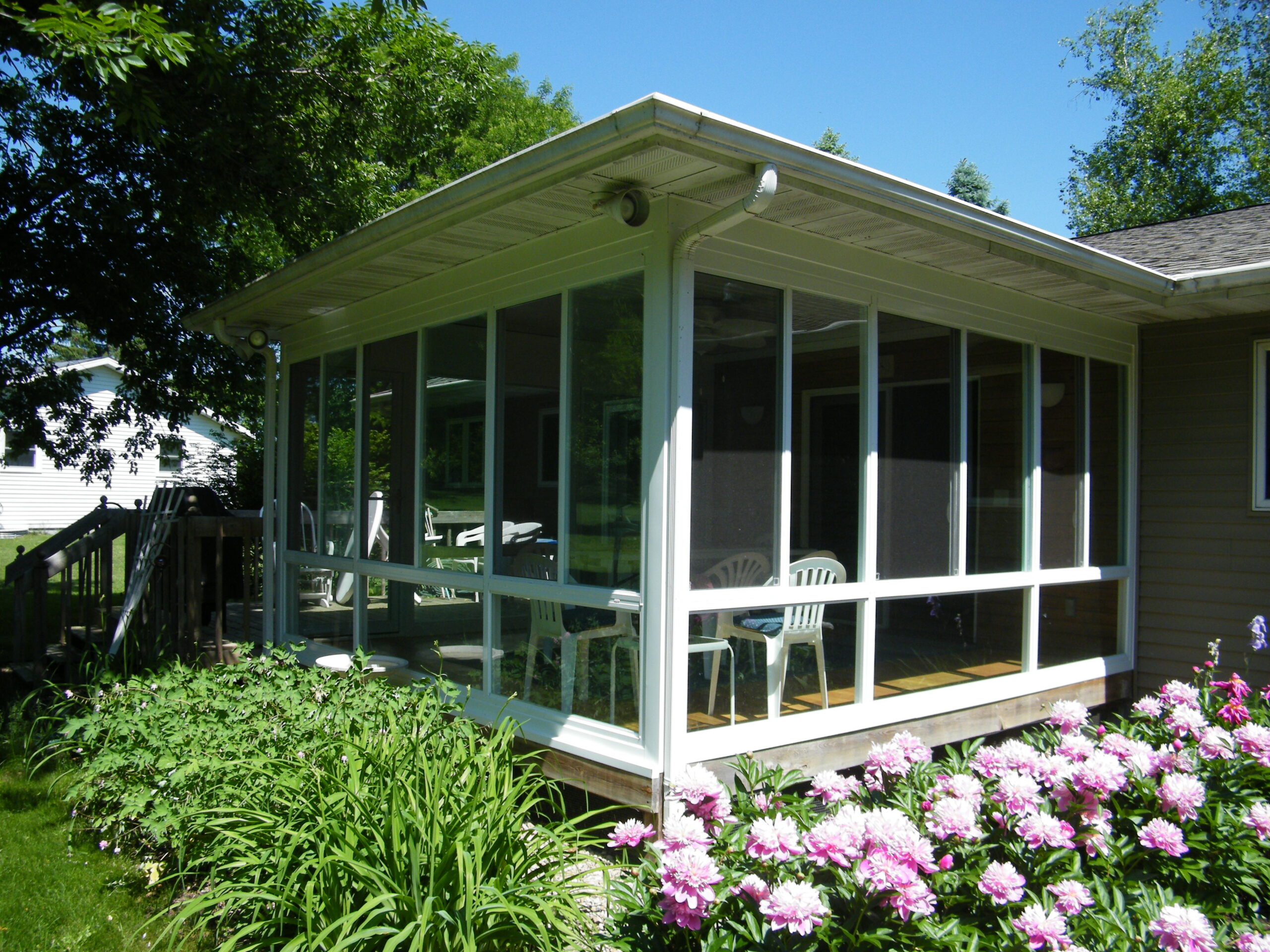
 A sunroom is easily one of the most beautiful additions you can make to your home. It bridges the gap between the comfort of your living room and the beauty of the outdoors. But for many homeowners, a common issue quickly arises: the space is a scorching greenhouse in July and a freezing icebox in January, especially in Wisconsin. If you are tired of letting extreme weather dictate when you can enjoy your view, you are in the right place. Achieving year-round sunroom temperature control is completely possible with the right mix of insulation, smart HVAC solutions, and window treatments.
Here is how you can transform your three-season or four-season room into a comfortable sanctuary 365 days a year.
Why Is Sunroom Climate Management So Challenging?
The very thing that makes a sunroom gorgeous is what makes it a thermal headache: glass.
Glass is a poor insulator compared to drywalled, insulated home walls. In the summer, solar radiation streams through the glass and gets trapped, creating a natural greenhouse effect. In the winter, the exact opposite happens—your home’s warm air escapes rapidly through the cold glass panes.
To combat this thermal transfer, you have to address both active climate systems and passive architectural elements.
Active Solutions for Managing Your Sunroom’s Climate
If you want absolute authority over the thermostat in your glass oasis, you need an active heating and cooling source. Relying solely on your home’s central HVAC system often falls short because sunrooms require significantly more energy per square foot to condition.
1. The Gold Standard: Ductless Mini-Split Systems
For ultimate sunroom temperature control, a ductless mini-split is hard to beat. These small, wall-mounted units offer independent heating and cooling specifically dedicated to the room.
Why they work: They are incredibly quiet, highly energy-efficient, and do not require you to tear open walls to run new ductwork from your main house.
2. Ceiling Fans for Constant Air Circulation
Never underestimate the power of moving air. A ceiling fan helps distribute conditioned air evenly throughout the room.
Summer setting: Run the fan counterclockwise to create a cool, refreshing breeze.
Winter setting: Run the fan clockwise on low speed to push warm air (which naturally rises to the ceiling) back down into the living space.
Passive Design Tweaks for Better Thermal Performance
Active systems do the heavy lifting, but passive solutions keep your energy bills from skyrocketing. By managing how much sunlight actually enters the room, you can naturally stabilize the environment.
Thermal Window Coverings
The right window treatments act as a thermal barrier between the glass and your living space.
Cellular (honeycomb) shades are particularly effective because their unique cellular pockets trap air, creating a powerful layer of insulation.
Reflective drapes can be closed during the hottest parts of summer afternoons to keep the sunroom cool, then opened on winter days to let natural sunlight warm the room for free.
The Golden Rule of Sunroom Comfort: Combine at least one active source (like a mini-split) with one passive element (like cellular shades). This dual-action approach ensures your temperature control is both highly effective and energy-efficient.
Take Back Your Sunroom
You shouldn’t have to abandon your favorite room in the house just because the seasons change. By implementing these climate solutions, you can sit back, relax, and enjoy the view in absolute comfort—no matter what the weather is doing outside. If you have any questions, please call us at 608-222-7777 or you can contact us. Follow Kool View on Facebook to know right when each blogs drops. Happy Summer!!